
Table of Contents
Why It Remains Timeless: Hardwood Flooring Prices
Hardwood flooring holds an unrivalled position in the interior design world. Architectural in its authority and deeply personal in character. Revered by selective homeowners and celebrated by designers of every era. These floors aren’t just a surface underfoot, but as a statement of sophistication. While trends evolve and materials attempt to reinterpret its appeal, hardwood remains the constant. When it comes to hardwood flooring prices, it's truly the aesthetic and appeal that homeowners are seeking.
At its most arresting, hardwood possesses a visual depth that synthetic or composite materials try to replicate but rarely get it right. Each plank bears the unrepeatable signature of nature’s living tree. This means each plank features mineral streaks, tonal variation, and grain formations. Beyond its authentic beauty, hardwood is luminously responsive. Under the early morning sun, warm amber and honey undertones emerge from within the grain. When it hurts late afternoon, those same boards deepen into something richer and more dramatic. It is a floor that shifts with the hours, offering a different composition of light and shadow with every passing moment. Within this revered category, a unique distinction emerges. One that shapes both performance and perception. That’s the difference between solid hardwood and engineered hardwood.
Two Distinctions in Design
Solid hardwood embodies a sense of authenticity and continuity. A type of flooring that speaks to its own timeless legacy. By contrast, engineered hardwood embraces a more contemporary expression by showcasing refined adaptability and efficiency.Both designs hold its rightful place within the category of flooring. The result isn’t simply an interior design selection, but an investment made with intention. One that harmonizes both the functional demands of space and the evolving narrative of how it will be lived over time.
Beyond its reputation, solid hardwood represents the material in its purest form. a plank milled from a single, continuous piece of timber. There are no layers, no composites, no structural compromises. This feature allows it to be refinished multiple times over generations, restoring its surface while preserving its integrity. Chosen not for its capacity to endure, adapt, and be renewed.
This isn’t to say there aren’t any drawbacks or compromises. That same natural wood composition makes it highly responsive to its surroundings. Changes in moisture and temperature can cause expansion and contraction. This is why solid hardwood is typically best suited for above-grade installations and carefully controlled interiors. Not to be considered a flaw in the design. But rather, it’s the nature of wood. In the right environment, it’s barely noticeable. In the wrong, it can lead to gapping, cupping, or buckling.
Engineered hardwood offers a modern interpretation of natural material. It features a genuine hardwood surface layered over a stable core of plywood or high-density fiber, designed to minimize natural wood movement and perform reliably across a wider range of environments.
Aesthetically, high-quality engineered hardwood is nearly indistinguishable from solid wood. Its surface is entirely authentic, showcasing the same rich grain patterns and natural finishes. The true difference lies beneath where its layered construction allows for greater adaptability in varying conditions.
There are, however, thoughtful trade-offs. Engineered hardwood typically allows for fewer refinishing cycles, depending on the thickness of its top layer. In return, it delivers enhanced stability and installation flexibility that solid hardwood cannot always match. Ultimately, the decision becomes less about compromise and more about choosing what best suits your space and lifestyle.
How Wood Species Shape Hardwood Costs
The species of wood is often the primary driver of hardwood pricing. At the more accessible end, red oak and ash remain enduring favorites. Both styles offer dependable durability, timeless appeal, and a balanced aesthetic at a more attainable price point. Yet even within this tier, preferences can shift with evolving design trends. Particularly grain character and tonal warmth rise and fall in popularity, but it truly boils down to personal preference.
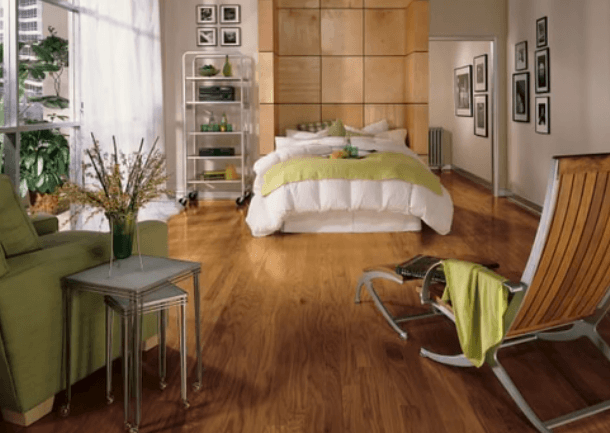
In the mid-range, hickory and maple are celebrated for their exceptional hardness and distinctive, and expressive grain patterns, bringing both resilience and visual character to interior spaces.
On the premium level, American white oak and walnut have become defining materials in design-forward environments which are valued for their depth of color, subtle complexity, and architectural presence.
At the very top of the hardwood flooring prices catalog is European white oak which stands as a benchmark of elevated craftsmanship. This design is often carefully sourced internationally and distinguished by its strong sustainability credentials.
The Cost of Going Wide
Wide-plank flooring has become one of the most coveted expressions in residential design and for good reason. Broader boards create a sense of quiet expansiveness, making rooms feel open and refined. The eye experiences less interruption with fewer seams. The result is a floor that showcases as a continuous and visually fluid surface. This creates a unique rhythmic elegance across your space.
This elevated aesthetic carries natural considerations. Wider and longer planks typically command a higher price, as they require higher-grade lumber. At this scale, natural variations become more visible, demanding more selective sourcing. The milling process is also more comprehensive, requiring precise craftsmanship to ensure stability and flatness.
However, this truly would be an investment that scales in both material integrity and enduring beauty. In the right space, wide-plank flooring delivers a striking and sophisticated presence that’s visually mesmerizing.
The Importance of Wear Layer
Located at the uppermost stratum of an engineered plank which gives the genuine hardwood surface its appearance, texture, and character. More importantly, it’s the layer your eye sees and your foot meets. This layer literally bears the full weight of daily life which includes foot traffic, furniture, and pets. Its thickness is measured in millimeters, which determines the number of times its surface can be sanded back and refinished over the life of the floor.
A wear layer of 2mm represents the minimum threshold. At this thickness, refinishing is possible in theory, but the margin for error is narrow. The floors may need to be replaced rather than restored. Step up to a 4mm wear layer, and the floor can typically be sanded and refinished two to three times. Each cycle stripping away surface wear, scratches, and discoloration which reveals the fresh and unblemished wood beneath.
A 6mm wear layer extends that potential even further, offering the possibility of four or more refinishing cycles. This means it only requires to be refinished rather than replaced overtime. This represents not only significant savings in costs, but also the avoidance of installation disruption and the embodied value of material that never needs to be discarded. Beyond refreshing your floors, a thicker wear layer has additional structural advantages that compound over time. Greater surface depth provides enhanced resistance to denting, scratching, and micro-abrasions that accumulate in high-traffic areas.
Subfloor Preparation: The Work Beneath the Surface
Hardwood flooring requires a flat and stable foundation. Before installation, the subfloor must be inspected for uneven areas, loose sections, and structural inconsistencies. From there it is then corrected through grinding, patching, or securing.
Often overlooked, this step is essential to prevent squeaks, hollow spots, and premature movement. Oftentimes this distinguishes a comprehensive quote from a lower-costing one.
Wood Essentials: Moisture Check
Wood is a living material, and it responds to its environment. This means expanding in humid conditions and contracting in dry ones. A professional installation begins well before the first board is placed. Moisture levels in both the subfloor and the incoming hardwood should be measured and accounted for. The flooring itself must adjust to the conditions of your space so that it can adjust to the ambient temperature and humidity before it is permanently fastened down.
At JP Flooring, delivery is thoughtfully aligned with the acclimation process, ensuring every detail is carefully inspected and refined as needed. This reflects a deliberate commitment to the long-term integrity of your floor. No step is rushed, and no detail is overlooked. These precise methods define an adequate installation from an exceptional one. As a trusted leader in flooring, we recognize that customer experience defines our success. Installation is at the heart of our success.
Our Trusted Services
Expert Installation, From Start to Finish
Every project begins and ends in the hands of seasoned professionals. We ensure your hardwood is laid with care and commitment to lasting results. The craftsmanship behind each plank placement is what separates a floor that looks good on day one from one that performs beautifully for decades.
Minor Floor Prep
Every subfloor is unique, and that’s exactly why minor floor prep is part of the process. Before a single plank is installed, the team addresses small imperfections, uneven spots, and surface irregularities that could compromise the finished look or long-term stability.
Seamless Transitions Between Every Space
Coordinating transitions are included to create smoot and cohesive connections between rooms, flooring types, and elevation changes. These finishing elements are carefully selected to complement your new hardwood, ensuring a polished and intentional look throughout your home.
New Quarter Round & Shoe Mold
The space between your floor and the baseboard is where lesser installations fall short. Fresh quarter round and shoe molding are installed with every project. Crisp, clean trim pieces that conceal gaps, protect edges, and give your new floor a truly finished appearance.
Delivery and Acclimation
Hardwood is a living material, and it responds to its environment. Allowing the planks to adjust to your home’s specific temperature and humidity levels before installation is important. This patience-driven process prevents warping, buckling, and gapping down the road.
Glue-Assist for Engineered Planks 5” and Wider
Wider engineered planks require a more secure bond. We include glue-assist in our installation which is ideal for five inch or greater planks. This added adhesion minimizes movement, reduces seasonal expansion, and contraction effects. Ultimately toensure your broader planks stay flat and firm.
Price Transparency
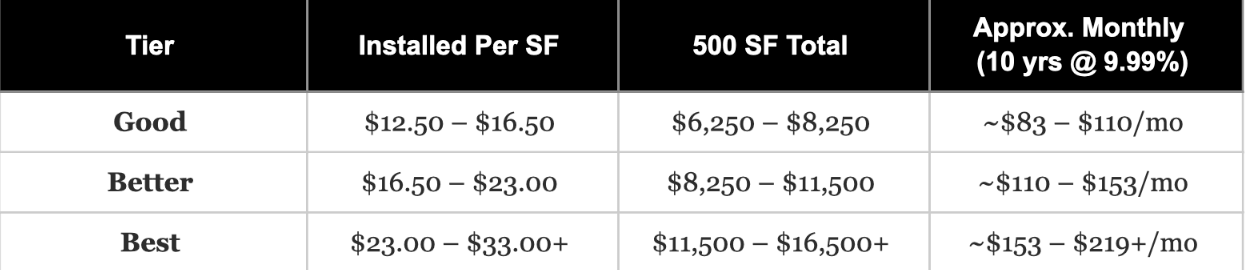
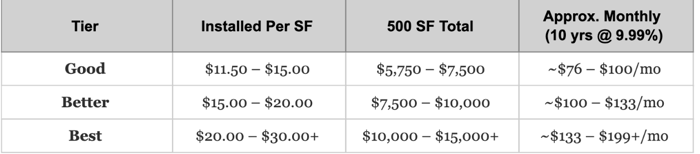
At America’s Floor Source, professionally installed hardwood flooring is typically priced across three tiers. Each reflects not only a different product specification, but a different performance expectation—from everyday durability to premium investments. The chart below illustrates what a 500-square-foot installation might realistically cost across each tier, including both materials and professional installation. These figures provide a meaningful baseline for project planning.
Solid Hardwood
Engineered Hardwood
Experience Our Timeless Hardwood Selection
Schedule a Private Design Consultation
The right flooring decision goes far beyond aesthetics. Our expert consultants provide personalized guidance on fiber composition, stain and wear resistance, durability classifications, and waterproof performance. This ensures every selection is a precise match for your home and the way you live in it.
Explore Our In-Home Mobile Showroom
Discover flooring options on your own terms. Our Mobile Floor Source brings a curated selection of premium, sustainable materials directly to your door, allowing you to compare designs in your own light, your own space, alongside a dedicated personal flooring advisor.
Receive an Instant Project Estimate
Our interactive pricing tool provides an informed cost estimate for your flooring project before you ever commit to a formal quote—giving you full transparency and confidence from the very first step.
FAQs
Is solid or engineered better?
Both are excellent. The better choice depends on your home. Solid hardwood is ideal when you want a classic, refinishable floor. Engineered hardwood is often better over concrete, in homes with wider temperature or humidity swings.
What affects installation cost the most?
Subfloor flatness, moisture readiness, and installation methods (nail-down, glue-down, or floating) are usually the biggest drivers. Stairs, complex layouts, and the need for glue-assist on wide engineered boards can add to labor and materials.
Does hardwood need to adjust to your home temperature?
Yes. Because hardwood responds to humidity, it needs time on-site before installation. Acclimation helps reduce long-term issues like cupping, gapping, or movement.
Can hardwood be refinished?
Solid hardwood can typically be refinished multiple times over its life. Engineered hardwood can often be refinished once or twice, depending on the thickness of the wear layer.
What should I check for in a hardwood estimate?
Make sure the estimate clearly lists species, grade, width, finish, installation method, transitions, moisture testing, demo, subfloor prep, and what’s included in the warranty. This makes it much easier to compare one quote to another.